How to Make Your Roblox Game Popular: Discovery, Retention and the First Five Minutes
Every Roblox creator has watched it happen to someone else: a simple game suddenly fills with players, while their own carefully built game sits empty.

In this guide
How Players Actually Find Games The Signals That Matter Most Fix the First Five Minutes Before Anything Else Icon, Title and Description: The Promise You Make The Launch Window: Do Not Waste It Retention: Give Players a Reason to Return Tomorrow Updates and Analytics: Improve on Evidence, Not Guesses Getting Your First Players Honestly Common Mistakes That Keep Good Games Small Frequently Asked Questions How long does it take for a Roblox game to become popular? Should I advertise my game on Roblox? Does updating every day help discovery? Can I copy a trending game's idea to get popular? Why did my game stop growing after a good first week? Related Guides on RBXMods SourcesEvery Roblox creator has watched it happen to someone else: a simple game suddenly fills with players, while their own carefully built game sits empty. It is tempting to believe the popular game found a trick — a keyword, a thumbnail style, a time to publish. There is no such trick. Roblox recommends games players choose, enjoy and return to, and stops recommending games players leave quickly. Popularity is the result of that loop, not a shortcut around it. This guide explains how it works, what to fix first, and how to launch so your game gets a fair chance.
Key takeaways
- There is no trick: recommendations reward games players click, enjoy and return to — and stop showing games players leave quickly.
- The signals that matter most are play-through rate, first-play bounce rate, play days and playtime — not total visits or likes.
- Fix the first five minutes before anything else: a clear goal, a fast first reward, and controls that work on a phone.
- Launch honestly and measure: publish privately first, go public when a stranger can play five minutes unaided, then change one thing at a time.
How Players Actually Find Games
Most players do not hunt through a catalogue. They open Roblox and pick from what is put in front of them: the Home feed, search results, a friend playing something, or a video they just watched. Your game has to earn its place on one of those surfaces.
The Home feed is the biggest surface. Roblox's "Recommended for You" sort picks games in two stages — first retrieving games a player might enjoy, then ranking them — watches what happens, and shows the game to more similar players if the first group stays, or stops showing it if they leave. Search matches the words a player types against your title, description and genre, then ranks matches by how well players responded to them. Friends and videos send people directly, which is valuable because those players arrive already interested. Discovery is a chain: a player must notice the game, understand it in seconds, enjoy the first minutes, and have a reason to return. Break any link and the chain stops.
The Signals That Matter Most
Roblox's recommendations pay most attention to four kinds of player behaviour, listed in its official discovery documentation as the most important signals:
| Signal | What it means in practice |
|---|---|
| Play-through rate | How many players shown your game in Recommended for You actually press play? A low rate means an unclear promise. |
| First-play bounce rate | How many new players leave after a short first session? A high rate means confusion, a broken spawn, or a misleading thumbnail. |
| Playtime per user | How long does an average visit last? Short visits mean players never find the fun, or run out of things to do. Roblox caps the playtime counted per user, per game, per day at 60 minutes. |
| Play days per user | On how many different days do players come back? A game nobody revisits has no growing audience. |
Notice what is not on that list: total visits or total likes. Those follow good behaviour; they do not cause it. A game with a thousand visits where everyone leaves in thirty seconds is in worse shape than a game with a hundred visits where players stay twenty minutes and return next day. Check those four behaviours first, and ignore vanity numbers until they improve. Roblox also weighs second-tier signals, including days players return to play with friends (intentional co-play) — another reason games played together tend to grow.
Fix the First Five Minutes Before Anything Else
The first five minutes decide almost everything. Watch a stranger play — not a friend who already knows the game — and note the exact moment they hesitate or look bored. That moment is your real to-do list.
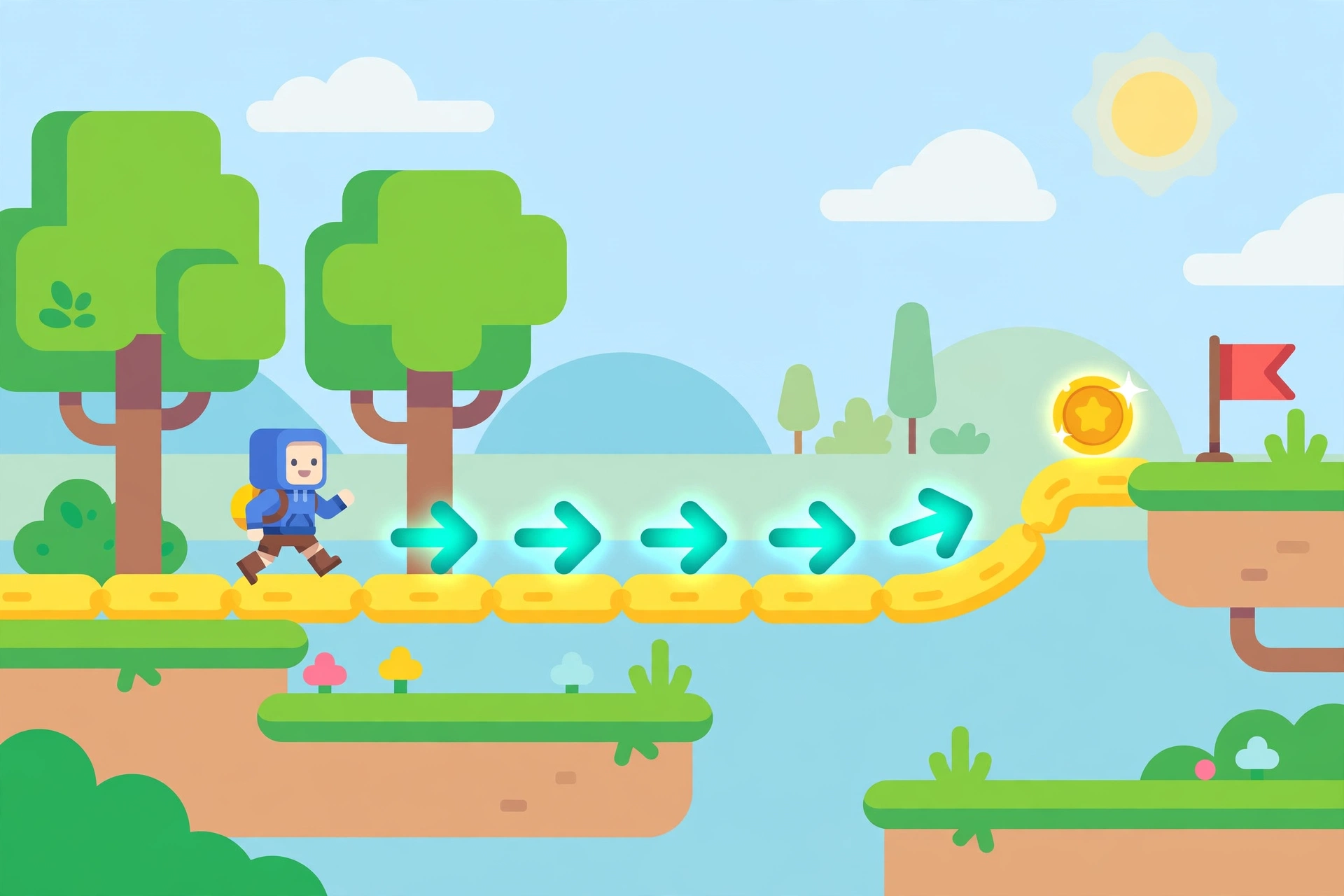
A strong opening has four qualities. First, the goal is obvious within seconds: a sign or quest arrow tells the player what to do. Second, the player gets a small reward fast — a coin or a first stage cleared — so the first minute feels like progress. Third, nothing blocks the fun: no long loading screen or menu to dismiss. Fourth, controls are taught by doing: a first jump over a tiny gap teaches jumping better than an instruction board.
Test the opening on a phone, not just on a computer. Most players are on mobile, and a game needing precise keyboard movement or tiny buttons will lose them before they reach the fun. If a jump is hard on a phone, widen the platform; if a button is hard to tap, make it bigger. Often the game was never the problem — the controls were.
Icon, Title and Description: The Promise You Make
Your icon and title are a promise, and the first five minutes are where players check whether you kept it. If the icon shows a dragon battle and the game opens on an empty field, players leave. The best icon shows one clear idea at a small size — the main character, activity, or place — with no paragraph of text. Thumbnails should show real gameplay, not a scene players never see.
Your title should say what the game is, in words players would actually type: the genre and the core activity, not a joke only your friends understand. Your description should open with the same idea in its first two sentences — what you do, and what makes it different. Keywords help only when honest: stuffing in famous game names, or promising rewards the game does not give, brings the wrong players, who leave fast and hurt the signals you need. An accurate description attracting the right fifty players beats a misleading one attracting five hundred who quit.
The Launch Window: Do Not Waste It
When a game first goes public, Roblox gives it a short test period: it shows the game to a small audience and measures how they respond. That is why publishing too early is so costly. A public game with a broken spawn, no goal, and placeholder art earns poor early signals, and recovering later takes far longer than waiting a week would have.
Publish early, but stay private. Let friends and a few strangers play the private version, fix the worst confusion, and only flip the game to public when a stranger can play for five minutes without asking what to do. Before that switch, check the basics: the icon reads at phone size, the description is honest, the spawn works, progress saves, and the game runs on low graphics settings. A quiet, ready launch beats a loud, broken one. After launch, change one thing at a time, or you will never know which change helped.
Retention: Give Players a Reason to Return Tomorrow
Getting a player once is not popularity; getting them back is. Players return for four reasons, and a lasting game usually offers at least two:
- Progress that survives. Saved coins, stages or levels — the player must see yesterday's work on return. A game that loses progress loses players permanently.
- Something new to do. A next zone, a new item, a harder mode, or a weekly challenge. It does not need to be huge; it needs to exist.
- People to play with. Friends, a team goal, or a reason to invite someone. Games played with friends are remembered longer.
- A routine worth keeping. A daily reward or task, or an event on a known day. Small, regular reasons beat rare, giant ones.
None of these requires constant huge updates. A small game with a clear next goal and reliable saving will outlast a big game that adds content once and then goes silent.
Updates and Analytics: Improve on Evidence, Not Guesses
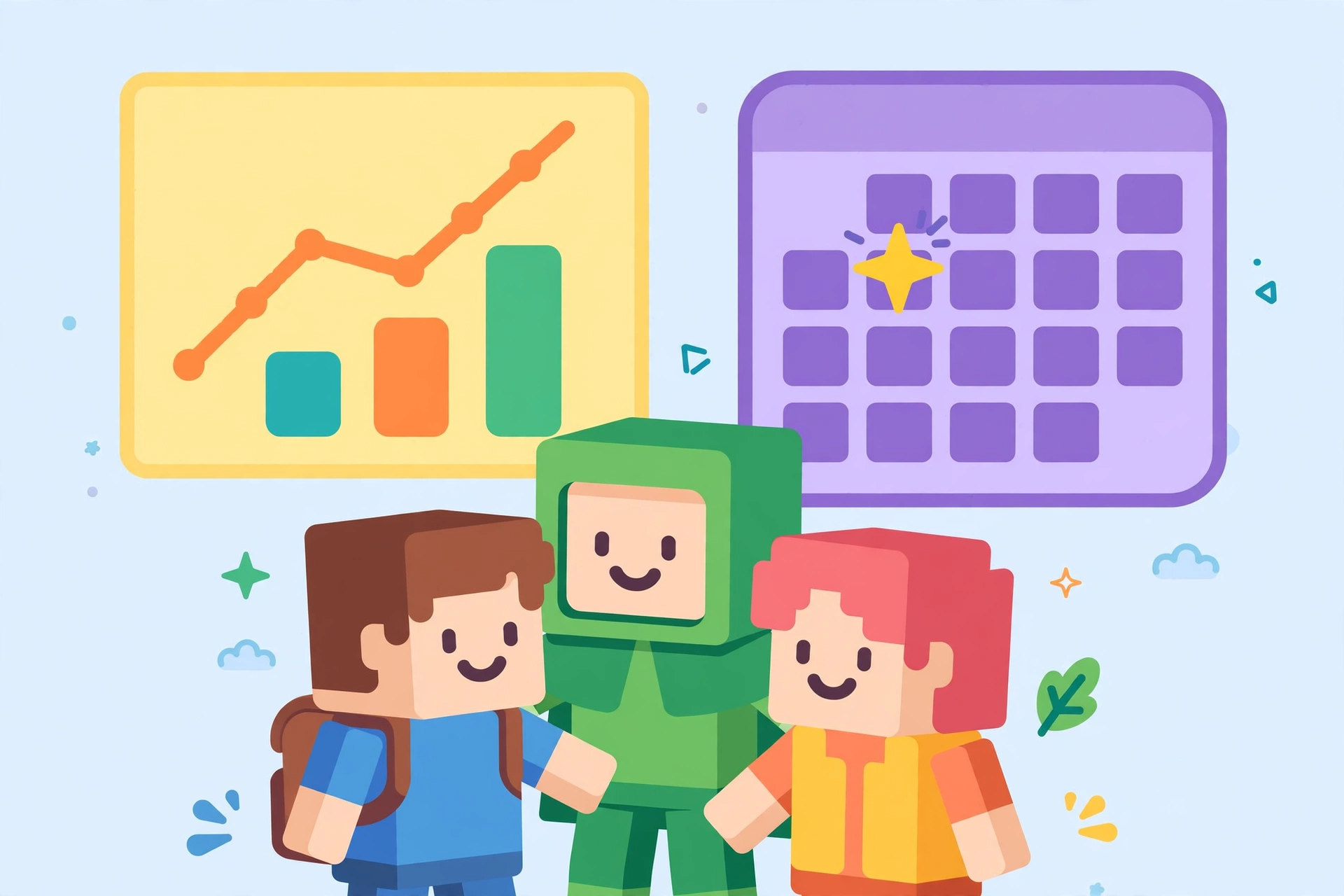
Once the game is public, your job changes from building to measuring. Creator Hub analytics show where players leave and whether they return. If most players quit at the same stage, that stage is too hard or unclear — fix the stage, not the advertising. If players stay long but never return, the game needs a next goal, not a new icon. If clicks are low but joiners stay happily, the icon or title is the problem, not the game.
Update on a rhythm players can learn — for most small creators, one meaningful update a week or fortnight beats daily noise. Each update should give returning players something to do: a new zone, a new item, a limited event, a fixed pain point. Say exactly what changed: "new desert zone and 10 new stages" brings players back; "big update!!!" does not.
Getting Your First Players Honestly
Every game starts at zero, and the honest ways to reach the first players are slower than the dishonest ones — and the only ones that work. Short videos of real gameplay, posted where your genre's players already watch, are the most reliable start: one clear moment of fun. A small Roblox advertisement test can show whether strangers click and stay, but treat it as a test, not a rescue — paying to send players into a confusing opening only buys bad signals faster.
Invite a few small creators to play on camera, not to praise the game but so you see where a stranger gets stuck. Build a small community early — a group or server for bug reports and ideas — because those players tell you what to build next. What never helps, and can get a game in trouble, is buying plays, faking engagement, copying another game's name and icon, or promising rewards for likes. Players gained that way leave immediately.
Common Mistakes That Keep Good Games Small
- Publishing before the first five minutes work. The launch test is spent on players who never return.
- A thumbnail that promises a different game. Clicks rise, early exits rise faster, recommendations fall.
- Building for yourself, not for a stranger. You know every jump; a new player knows none.
- Ignoring phones. If most players cannot control the game, most leave.
- Changing everything at once. No change can be judged, so nothing is learned.
- Chasing visits instead of returns. One-time spikes are not growth; a smaller daily returning group is.
Frequently Asked Questions
How long does it take for a Roblox game to become popular?
There is no normal time. Some games grow in weeks, many slowly over months. Judge progress by the signals: are early exits falling, sessions lengthening, more players returning? If so, the game is growing.
Should I advertise my game on Roblox?
Only after the first five minutes work and progress saves reliably. A small advertisement test can then show whether strangers click and stay. If they click but leave, fix the game first.
Does updating every day help discovery?
Not by itself. Meaningful updates help because they give returning players something to do. Tiny daily changes with nothing new to play do not move the signals that matter.
Can I copy a trending game's idea to get popular?
You can learn from a trend — a genre or mechanic players want — but copying a game's name, art, or exact design brings the wrong audience and risks moderation action. Lasting games add one clear twist of their own.
Why did my game stop growing after a good first week?
Usually the first players finished everything and had no reason to return, or a later change broke the opening. Check what changed the week the fall started.
Popularity is not a prize for the loudest launch. It is a clear promise, a first five minutes that respect the player's time, and a reason to come back tomorrow — repeated and improved week after week.
Related Guides on RBXMods
- How to make a game pass on Roblox and sell it for Robux — pricing, setup and the mistakes that stop passes from selling.
- How to publish your Roblox game — icon, thumbnail and the publish step before launch.
- Roblox DataStore explained — how saving player data works, and how to avoid losing it.
- Roblox Studio beginner roadmap — the first-game path, from first build to first publish.
RBXMods is not affiliated with or endorsed by Roblox Corporation. Roblox and the Roblox logo are trademarks of Roblox Corporation.
Sources
- Roblox Creator Documentation: Discovery — how Recommended for You retrieval and ranking work, and the key signals: play-through rate, first-play bounce rate, play days and playtime per user.
- Roblox Creator Dashboard — Creator Hub analytics, where you check where players leave and whether they return.
- Roblox Creator Documentation — the official reference for discovery, analytics and publishing.